.png)
Udaipur: At a time when modern cuisine is steadily making its way into everyday meals, a food festival at Central Public School (CPS) brought back the forgotten flavours of Rajasthan, Mewar and Punjab, giving the younger generation a taste of traditional recipes once associated with weddings and special occasions.
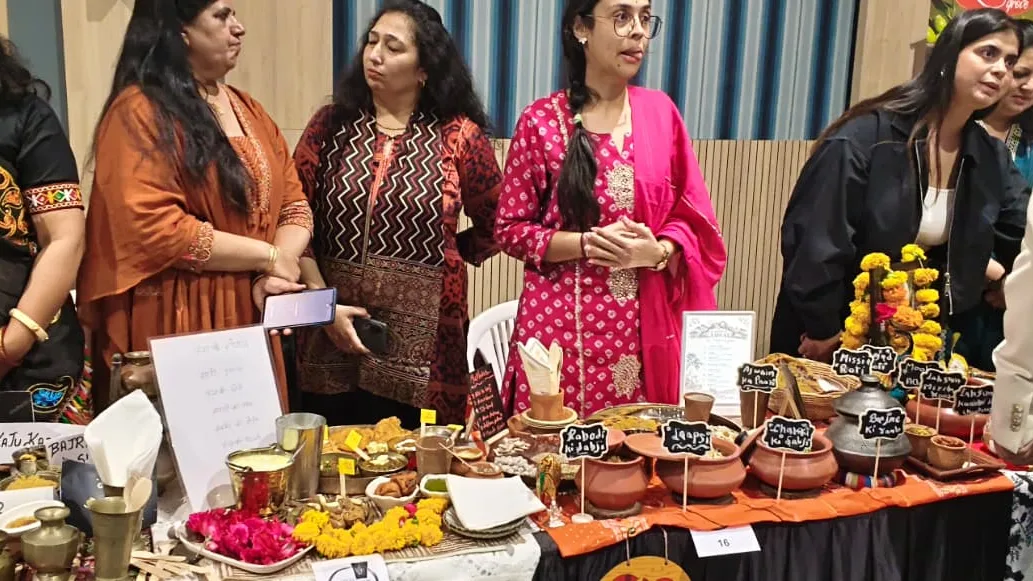
Bajra roti, kachre ki chutney, rabri, sarson ka saag and shahi pulao, among several other traditional dishes, were showcased at the festival organised jointly by Central Public School and the Royal Rajasthan Chefs Society.
Chef Vimal Dhar, the organiser, said the ninth edition of the festival was based on the theme ‘Chefs’ Contract: Kahin Kho Na Jaye’, aimed at preserving traditional culinary practices and passing them on to the next generation.
A spread of traditional flavours
The festival brought together an array of traditional dishes from Rajasthan, Mewar and Punjab. Makki, jowar and bajra rotis, rabri, kachre ki chutney, mirchi rakota, sattu tikad, shahi gol papdi, dhokla, Sindhi kutti, tahiri, rice roti, shahi pulao, Punjabi chhole, sarson ka saag and chawal ka jol were among the attractions.
Chef Sangeeta Dhar said children were not only encouraged to taste the dishes but were also introduced to the traditional methods of preparing them. They were told about the ingredients, spices and cooking techniques used in the preparation of the recipes.
Preserving 60-70-year-old culinary traditions
CPS Director Alka Sharma said traditional dishes were once an integral part of weddings, particularly royal weddings, where their flavours were accompanied by elaborate traditions of preparation and presentation.
“Over the years, food preferences have changed and newer dishes have replaced many traditional recipes,” she said.
She added that while hotels and restaurants today offer a wide variety of cuisines, the authentic flavours and traditional methods used to prepare recipes that are 60-70 years old are becoming increasingly difficult to find.
The festival, she said, was an effort to preserve these culinary traditions and familiarise children with the food heritage of earlier generations.
A taste of grandmother’s kitchen
For many children, the festival turned into a journey through food and memories. Several students said such traditional dishes were no longer regularly prepared at home, though they had often heard their grandparents recall the recipes and flavours of their childhood.
The event highlighted that food habits may change and new dishes may continue to find a place on the dining table, but preserving traditional culinary practices and the flavours associated with one’s cultural roots remains equally important.
For some flavours, the organisers said, food is more than just a meal—it is a link between generations and an expression of cultural heritage.