.png)
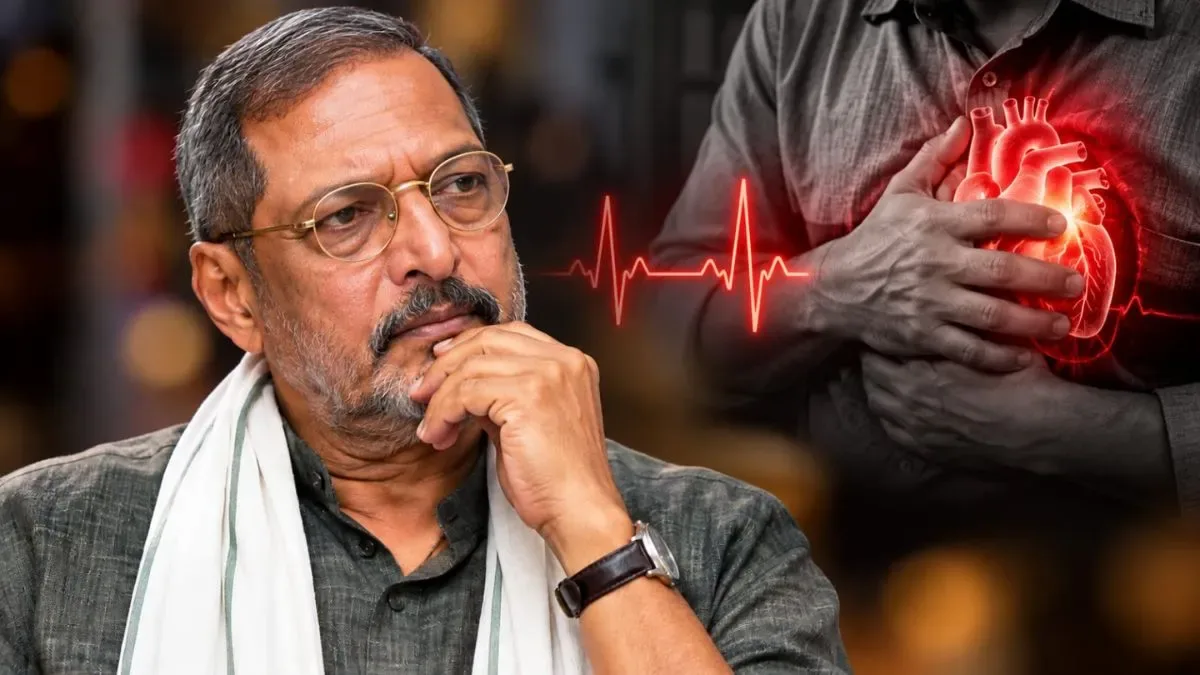
In Indian cinema, there are a few artists whom it would be an injustice to describe merely as actors. Nana Patekar was one such rare personality. He was an actor, theatre artist, director, writer, a sensitive citizen deeply connected with social causes, and an individual whose respect and commitment toward the Indian armed forces were remarkable. His voice carried a distinctive roughness, his dialogues had an edge, his eyes reflected anger and intensity, and his face seemed to bear the truth of life’s struggles. He never treated acting as a decorative art; instead, he connected it with the realities of human life, pain, struggle, sensitivity and social consciousness. With his passing at the age of 75 on October 8, 2026, Indian cinema has lost an artist whose place can never truly be filled. For generations of film lovers, Nana Patekar was not merely an actor but an inseparable and beloved presence.
Nana’s cinematic talent repeatedly surprised, thrilled and provoked audiences because the greatest strength of his films was their authentic portrayal of ordinary people, their struggles and the complexities of Indian society. India is a land of countless colours, unforgettable streams of art and culture, and a vast, extraordinary history filled with innumerable stories. Nana’s cinematic era represented a significant chapter in the effort to view the world through the window of India and to present India to the world. Through many of his characters, he also strengthened the spirit of nationalism and civic responsibility. His journey is an inspiring chapter for anyone who has ever felt completely defeated by circumstances—a testimony to courage, perseverance and hope.
Nana Patekar’s real name was Vishwanath Patekar. He was born on January 1, 1951, in Murud-Janjira, Maharashtra. His childhood was ordinary, but the family faced severe financial difficulties during his adolescence. After his father’s business collapsed, Nana had to work at the age of just 13 to support his family. After school, he painted film posters in Mumbai and earned around Rs. 35 a month. He walked several kilometres to work and sometimes received only one meal in return. Poverty and deprivation did not break him; instead, they forged his character. He later acknowledged that hunger and humiliation taught him to understand life and its realities. Art had been a part of Nana’s life from an early age. He studied at the Sir J. J. Institute of Applied Art and worked as a commercial artist. But his real school was theatre. Under the guidance of renowned Marathi theatre director Vijaya Mehta, he learnt the finer nuances of acting. Plays such as Hamidebai Chi Kothi established him as a serious theatre artist. Theatre taught him not merely how to deliver dialogue, but how to live the emotion hidden behind the words.
Nana began his film journey with Gaman, but it was Parinda that brought him widespread recognition. His portrayal of a menacing character earned him the National Film Award for Best Supporting Actor as well as the Filmfare Award for Best Supporting Actor. Thereafter, he delivered memorable performances in films such as Krantiveer, Khamoshi: The Musical, Yashwant, Ab Tak Chhappan, Apaharan, Welcome and Raajneeti. Despite disappointments during the early years of his career, he never abandoned his path. Films such as Ankush and Salaam Bombay! brought greater recognition to his remarkable talent. Nana subsequently created a distinctive language of acting in Hindi cinema through characters that were intense, complex and unforgettable. In Angaar, he portrayed a negative character with remarkable force. In Tirangaa, he played the patriotic Shivaji Rao Wagle; in Krantiveer, the fiery and rebellious Pratap Narayan Tilak; in Agni Sakshi, a psychologically complex character; and in Khamoshi: The Musical, a deeply sensitive father. Each role revealed a different dimension of his personality as an actor. For Krantiveer, he received the National Film Award for Best Actor, and he was again honoured with the National Award for Agni Sakshi. Thus, he became one of the distinguished actors to receive three National Film Awards.
The greatest strength of Nana’s acting was intensity rooted in naturalness. He did not merely speak dialogue; he lived it. His voice could become a quiet whisper one moment and erupt like an explosion the next. His eyes, facial expressions, gestures, pauses and sudden changes in rhythm created a unique dramatic grammar. His dialogue delivery was so distinctive that even an ordinary sentence could become memorable when spoken by him. Yet he never allowed dialogue to overpower acting; rather, he gave dialogue its meaning through his performance. Welcome opened another fascinating chapter in Nana’s popular appeal. Known primarily for serious, intense and aggressive roles, he surprised audiences with his comic performance as Uday Shetty. His famous “Control, Uday, control!” became part of popular culture. It demonstrated his extraordinary versatility that the same actor who could deeply disturb audiences in Parinda and Krantiveer could also make them laugh wholeheartedly in Welcome. In the 2000s, films such as Ab Tak Chhappan, Apaharan, Shakti: The Power and Raajneeti further revealed the maturity and depth of his craft. In Marathi cinema too, he remained connected with his roots. His performance as Ganpatrao Belwalkar in Natsamrat (2016) is regarded as one of the most moving performances of his career.
Nana was never satisfied with being merely an actor. With Prahaar: The Final Attack, which he directed, he demonstrated his abilities as a filmmaker and writer. During the preparation for the film, he underwent rigorous military training. His association with the Indian Army subsequently became a meaningful part of his real life. He joined the Territorial Army and attained the honorary rank of Lieutenant Colonel. During the Kargil War in 1999, he also spent time with soldiers. The artist who portrayed patriotism on screen expressed his respect for the nation in real life as well. His nationalism was never merely a slogan; it was rooted in duty, discipline and sensitivity. Films such as Tirangaa, Prahaar and Krantiveer reflected questions of national identity, social responsibility and civic duty. For Nana, patriotism was not restricted to soldiers fighting at the borders. Performing one’s work honestly, standing with the vulnerable and accepting responsibility toward society were also forms of national service.
Another defining quality of Nana’s personality was his simplicity and social commitment. He was deeply concerned about the problems of farmers and the rural crisis in Maharashtra. In 2015, he founded the Naam Foundation with actor Makarand Anaspure to support farmers and drought-affected rural families. He also contributed financially to relief and social initiatives. Prime Minister Narendra Modi, while mourning his passing, described the veteran actor as a true “Krantiveer” who fought against social evils. His silence could be as powerful as his commanding voice, and he consistently advocated firmness against forces working against the nation. Perhaps Nana Patekar’s greatest achievement was that he never tried to become merely a star; he remained an artist. Living in the glamorous world of cinema, he never became disconnected from his roots. Poverty made him sensitive, theatre gave him discipline, cinema gave him a wider platform, the Army strengthened his sense of national duty, and social service kept the human being within him alive. His legacy does not lie merely in the awards he received, but in the characters, he immortalised—Anna of Parinda, Pratap of Krantiveer, Shivaji Rao of Tirangaa, the police officer of Ab Tak Chhappan, Ganpat Belwalkar of Natsamrat and Uday Shetty of Welcome. They are different faces of Nana Patekar, but behind them was one extraordinary artist who never merely displayed acting; he lived it with profound sensitivity.
Nana Patekar’s life conveys a powerful message: talent does not depend upon opportunity. The teenager who once painted film posters for Rs. 35 a month went on to receive three National Film Awards and the Padma Shri. India has lost a remarkable actor, but his art, voice, unforgettable dialogues, struggles and image as a sensitive and responsible citizen will remain alive for generations. Perhaps Nana Patekar’s greatest film was his own life—a story that began with struggle, was enriched by sensitivity and ultimately found its meaning in the truth of action and character.