.png)
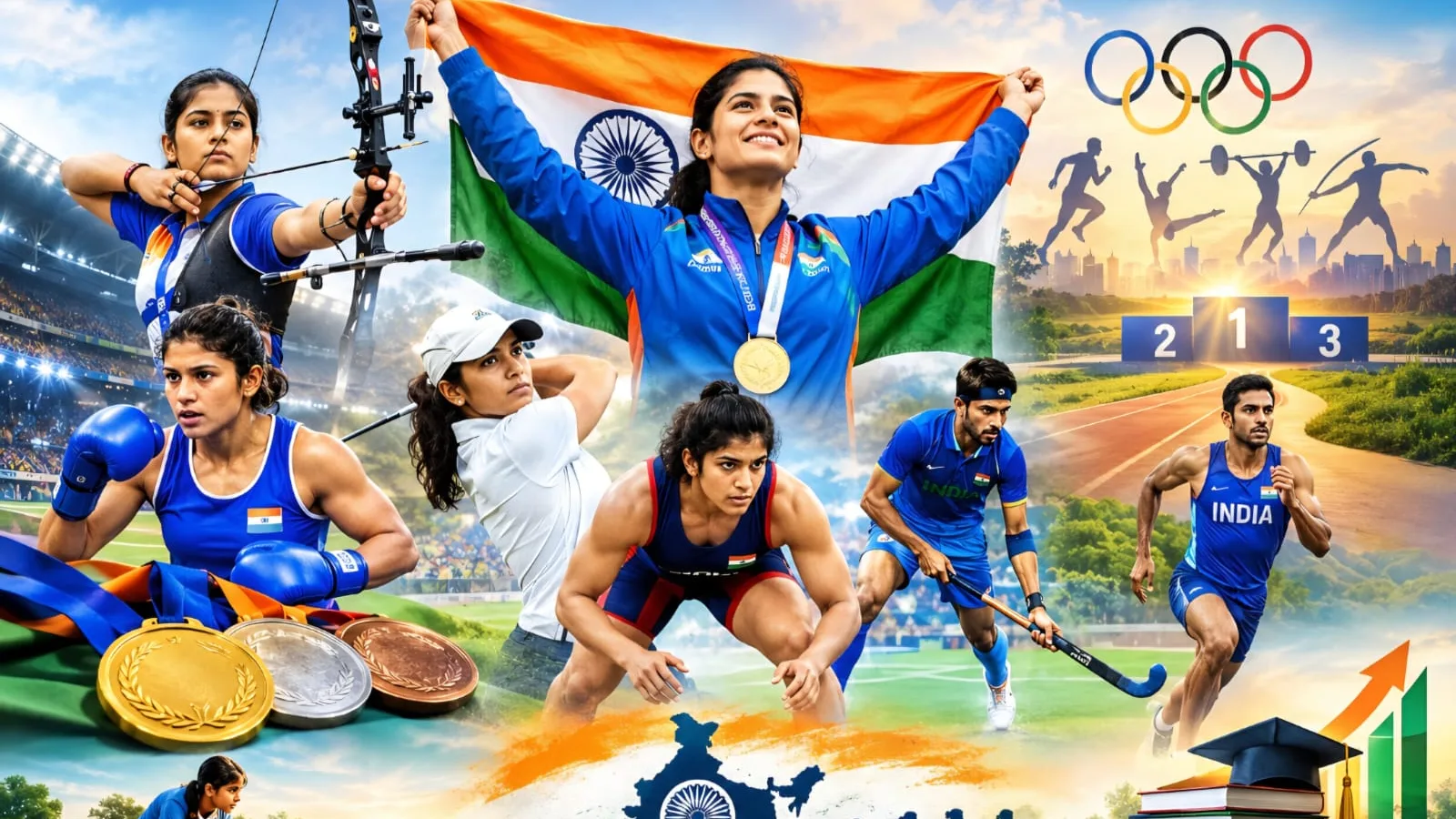
India’s fourth-place finish at the Asian Games is undoubtedly an achievement, but for a nation aspiring to become a Vishwaguru—a global leader—it should not become a reason for complacency. Instead, it should serve as an occasion for introspection and a renewed resolve. At the Aichi-Nagoya Asian Games, Indian athletes won 85 medals—21 gold, 27 silver and 37 bronzes—demonstrating the depth and potential of Indian sporting talent. Finishing among the top four nations in Asia, a continent that is a powerhouse of sport, is by no means an ordinary accomplishment. Yet the question remains: when China and Japan are ahead of us, when will India rise to the first or second position? An even larger question is this: if we aspire to see India at the forefront of the world in economic, scientific, technological and strategic power, why has our sporting prowess still not reached the heights we expect? The Asian Games medals present two contrasting pictures of India’s sporting journey. The first is inspiring. India’s nine medals in archery, including five golds, demonstrate the country’s growing dominance in the discipline. Kumkum Mohod’s individual achievement in the recurve category, Pranavi Urs becoming the first Indian woman to win an individual golf gold medal, and the impressive performances in boxing and wrestling reflect the breadth of India’s sporting talent. Indian dominance in cricket, hockey and kabaddi also continued.
The success of the women’s hockey team is particularly significant. Defeating defending champions China to win the gold medal was not merely another addition to the medal tally; it ended a wait of more than four decades. The victory demonstrates that when talent, discipline, team spirit and unwavering commitment to a goal come together, Indian athletes can challenge and defeat any opponent. But the second picture demands serious introspection. India’s performance in athletics was below expectations. Shooting, traditionally regarded as one of India’s strongest medal prospects, also failed to fully live up to expectations. The decline in the overall medal tally as well as the number of gold medals compared with the previous edition is a serious signal. Therefore, fourth place should not be regarded as our destination; it must be seen as a stepping stone towards the next great leap.
The gap between India and sporting powers such as China and Japan cannot be understood merely through the medal table. Reaching the top requires years of scientific planning, grassroots talent identification, modern training systems, sports science, nutrition, psychological conditioning, medical support and sustained exposure to international competition. China has developed sport as an important dimension of national strength. Japan has integrated sporting culture with education, discipline and lifestyle. India’s challenge is to ensure that its enormous young population is not viewed merely as a pool of potential athletes, but is transformed into world-class sporting talent through a robust and systematic ecosystem. India has never lacked talent. What it has lacked is a comprehensive system capable of identifying that talent, nurturing it and sustaining it at the international level. Countless promising athletes from villages, small towns and ordinary families are still unable to progress because of inadequate training, resources and opportunities.
Under the leadership of Prime Minister Narendra Modi, India’s approach towards sport has changed significantly in recent years. Sport is no longer viewed merely as entertainment or as a field reserved for a select group of athletes. It is increasingly being linked with national prestige, youth empowerment and the creation of a healthy society. Initiatives such as Khelo India have created an important environment for identifying sporting talent at the grassroots level. India’s growing presence at the Olympics and Asian Games is also evidence of this transformation. But the next phase must be far more ambitious. We should not merely ask how many medals India can win; we should ask in which sports India can become a world-leading power. We must move beyond a medal-centric approach and create a comprehensive sporting ecosystem in which responsibility is clearly defined at every stage—from discovering talent to developing, supporting and sustaining an athlete’s international career.
For decades, sport and education in India were treated as competing priorities. That mindset must change. Sport is not an obstacle to a student’s education; it is a powerful instrument of personality development. Schools should provide dedicated sports hours, trained coaches, modern playing facilities and structured fitness programmes. If a child demonstrates exceptional sporting ability, financial circumstances should never become an obstacle to that child’s future. The government, private sector, sporting institutions and corporate world must work together to create a system that provides talented athletes with financial security for training, equipment, nutrition, travel and participation in competitions.
India’s next challenge is not merely to win medals but to create champions consistently. After one athlete achieves success, the next generation in that sport should already be in preparation. For this, sports science must become an integral part of training. Modern fitness systems, data analytics, biomechanics, sports medicine, psychology and nutrition science need to be incorporated extensively into India’s sporting ecosystem. Mental strength is equally important. On the international stage, the ability to handle pressure can be as decisive as talent itself. Athletes therefore need regular access to sports psychologists and mental-conditioning experts. A poor performance in one competition should not be treated as the final verdict on an athlete’s ability. It should instead be regarded as an opportunity to learn, recover and make a stronger comeback.
Indian women athletes have emerged as one of the most encouraging stories of the country’s sporting future. Their achievements in recent years have demonstrated that Indian women possess immense potential to excel on the world stage. The women’s hockey gold is a powerful example. Women have also made their mark in archery, boxing, wrestling, athletics, golf and several other disciplines. The next priority should be to launch focused programmes to bring more girls from rural and semi-urban areas into sport. Safe sporting facilities, women coaches, scholarships and a supportive family environment can bring about a major transformation. India cannot aspire to become a global sporting powerhouse without fully involving half of its population in its sporting journey. The Los Angeles Olympics 2028 are not far away. Therefore, the achievements and shortcomings revealed by the Asian Games should not remain confined to headlines and post-event discussions. For every sport, a realistic assessment of medal prospects, a list of potential athletes, a scientific training programme and an international competition calendar should be prepared well in advance.
India must identify the sports in which it can make a major breakthrough at the next Olympics. At the same time, strategic investment is needed in disciplines where India has consistently lagged behind. The objective should be to develop broad medal-winning potential not merely in a few traditional strengths, but across athletics, swimming, shooting, gymnastics, cycling, wrestling, boxing and other Olympic disciplines. India’s fourth-place finish conveys a clear message: we are not behind, but there is still a long road ahead. Our economy is strengthening, our achievements in science and technology are expanding, our educational and physical infrastructure is growing, and India’s role on the global stage is becoming increasingly influential. At such a moment, world-class sporting excellence must also become an integral part of our national identity. Sport does much more than produce medals. It teaches discipline, perseverance, leadership, teamwork, self-confidence and the culture of a healthy life. Investment in sport is therefore, in the truest sense, an investment in the future of the nation.
Aichi-Nagoya gives India every reason to feel proud, but even more importantly, it gives us a reason to strive harder. Fourth place is not the destination; it is both a warning and a challenge. India must now resolve that in the next Asian Games; we will not enter the arena merely to remain among the top four—we will compete for the first and second positions. And at the Olympics, our ambition should not be limited to increasing the medal count; we must prepare ourselves to emerge as a genuine global sporting power. The India that aspires to become a Vishwaguru must also take equally determined steps towards becoming a global leader in sport.