.png)
Jaipur: The second day of ‘Octave 2026’, being organised by the West Zone Cultural Centre (WZCC), Udaipur, in association with Rajasthan International Centre (RIC), showcased the rich and diverse cultural heritage of Northeast India through a vibrant costume show, Manipuri Ras and a spectacular choreographic presentation.
Traditional Costumes of Eight Northeastern States
The costume show featured traditional handmade attire from the eight Northeastern states, popularly referred to as the “Seven Sisters and One Brother”, with Sikkim representing the eighth state. Young men and women walked the ramp wearing traditional costumes representing each state, drawing enthusiastic applause from the audience.
The models subsequently appeared in pairs, showcasing different traditional ensembles, before all eight models came together on stage for a collective presentation. The colourful costumes, each reflecting the distinct cultural identity of its state, fascinated the audience. Several spectators said the presentation offered them an opportunity not only to see unfamiliar traditional attire but also to gain a closer understanding of the cultural diversity of Northeast India.
WZCC Director Dr Ashwin M. Dalvi felicitated IAS officer Naveen Jain, Prof. Mayarani Tak, Ministry of Culture Under Secretary Laxmi Kant Mandal and former WZCC Director Devendra Kumar Dhodawat by presenting them with angavastrams.
Manipuri Ras Captivates Audience
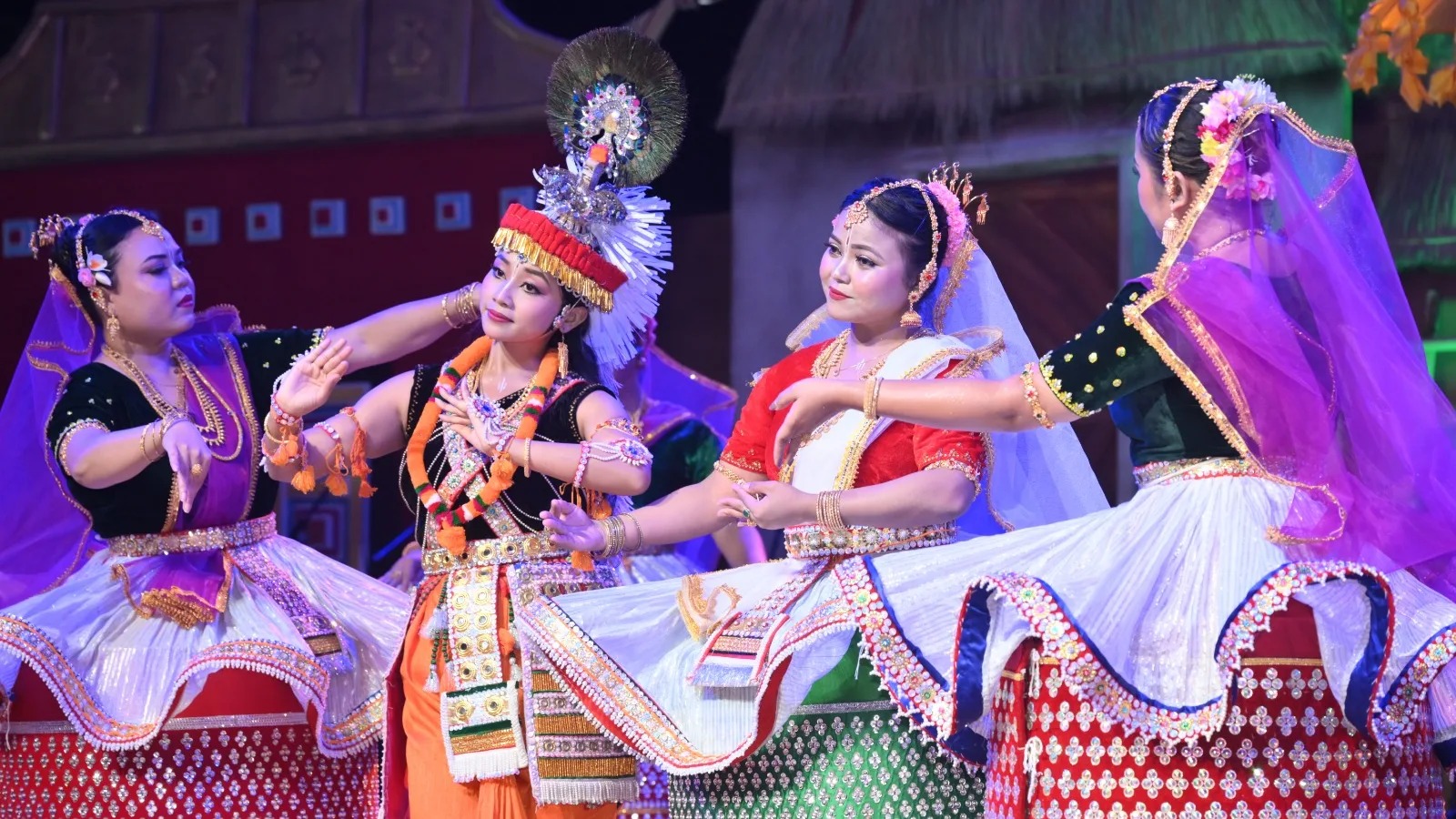
The costume show was followed by a mesmerising presentation of Manipuri Ras, which brought alive the devotional traditions associated with Lord Krishna and Radha.
The performance depicted Krishna playing his flute, followed by the arrival of Radha and the gopis and the enactment of the Ras Leela. The presentation drew inspiration from the rich Vaishnavite tradition of Manipur and the devotional narratives associated with Krishna and Radha.
The graceful movements, hand gestures and expressions of the performers reflected the ‘Lasya’, or gentle and delicate aesthetic, characteristic of the dance form. The traditional Manipuri attire added to the visual appeal, with Krishna appearing in the Natwar costume while Radha and the gopis performed in traditional Potloi attire.
The musical accompaniment featured the Pung, the traditional Manipuri drum, and kartal. The concluding sequence depicting the worship and aarti of Radha and Krishna created a deeply spiritual atmosphere and received warm appreciation from the audience.
Vibrant Choreographic Presentation
The evening concluded with a spectacular choreographic presentation bringing together traditional dances from all eight Northeastern states. Directed by renowned Indian choreographer Professor Tarun Pradhan, the performance offered a vibrant showcase of the region’s diverse traditions, rituals and martial arts.
The presentation opened with Arunachal Pradesh’s Tai Khamti dance, also known as the Peacock Dance, reflecting spiritual devotion to Lord Buddha. The state’s Juju-Jaja dance also delighted the audience.
From Manipur, the energetic Pung Cholom featured dancers performing acrobatic movements while playing traditional drums. Thang-Ta, a martial art combining sword and spear techniques, showcased the region’s traditional combat skills, while Lai Haraoba added another dimension to the cultural presentation.
Tripura’s Hojagiri proved to be a visual spectacle, with performers balancing on earthen pots while carrying plates, bottles and lamps. The state’s Mamita dance depicted the worship of Goddess Lakshmi following the harvest, adding a devotional element to the programme.
Sikkim’s Tamang Selo portrayed the celebration of marriage in the Buddhist tradition, while the Singhi Chham featured performers dressed as snow lions, creating an exciting visual experience.
Meghalaya’s Wangala celebrated the harvest and expressed gratitude to the Sun God, Saljong, for a good crop. Assam’s energetic Bardoi Shikla, performed by the Bodo community, was followed by the lively Bihu, traditionally associated with the harvest season.
Mizoram’s Cheraw, the traditional bamboo dance, showcased remarkable coordination between the performers, while Sarlamkai (Solakia) celebrated victory in battle through dynamic movements.
The powerful Naga War Dance of Nagaland brought the presentation to a dramatic close. Accompanied by the beats of drums, performers displayed energetic footwork, warlike movements and traditional martial skills, leaving the audience enthralled.
Through its colourful costumes, devotional traditions, folk dances and martial performances, Octave 2026 offered Jaipur’s art lovers an immersive glimpse into the extraordinary cultural diversity of Northeast India.