.png)

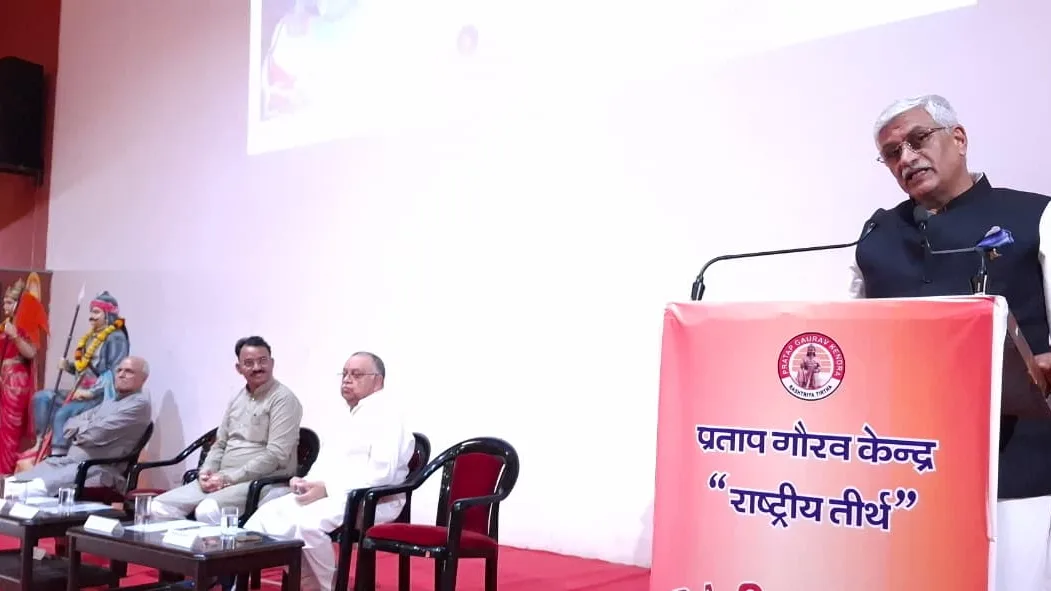
Udaipur, “Maharana Pratap was needed yesterday, is needed today, and will be needed tomorrow. We must draw inspiration from such self-respecting warriors who dedicated themselves to the motherland and prioritized the nation above all else. We must imbibe their ideals; otherwise, the light of freedom will fade into a dim dusk,” said Hukamchand Sanwla, member of the All India Executive Committee of the Vishva Hindu Parishad, while addressing a gathering at the Pratap Gaurav Kendra (National Tirth) on the occasion of Diver Vijay Diwas.
Sanwla began his powerful speech with the invocation: “Victory to dharma, destruction to adharma, welfare of the world, and harmony among all living beings,” and eloquently defined courage, devotion to dharma, and patriotism.
Maharana Pratap as the Guardian of Dharma
The main speaker drew a parallel between the era of Lord Rama, when Ravana and other tyrants were vanquished to establish dharma, and Maharana Pratap’s time, during which he fought to protect righteousness. He emphasized that Sanatan Dharma has survived till today—not destroyed by tyrants like Ravana or Kansa—and remains protected due to the unity and strength of the extended Hindu family, a safeguard that will continue into the future.
Sanwla described Maharana Pratap as the very soul of India, asserting that he is not just a figure in history books but lives on in the spirit of the people. Comparing the lineage of Pratap and Akbar, he noted that Maharana Pratap’s descendants continue to command respect and admiration worldwide.
The Valor and Legacy of Maharana Pratap
Sanwla highlighted that Maharana Pratap stood against tyranny and accomplished extraordinary feats within his short life of 57 years, elevating Mewar’s glory on the global stage. He linked Pratap with Chhatrapati Shivaji, noting that both carried forward the legacy of Lord Rama’s forebears, which helped preserve India’s cultural continuity. He also emphasized that guerrilla warfare strategies were pioneered in Mewar and later effectively adopted by Shivaji.
Addressing historical debates, Sanwla stated that portraying Maharana Pratap as defeated at the Battle of Haldighati is a historian’s error. In reality, Pratap emerged victorious. “Words written in ink may be altered, but what is etched in stone can never be erased; hence, Maharana Pratap’s name remains immortal,” he said.
Illustrating Pratap’s courage, Sanwla recounted the story of Bahlol Khan, a towering warrior of 7 feet 8 inches, who intimidated many kings. Maharana Pratap reportedly defeated him along with his horse, showcasing unmatched valor. Sanwla added that Pratap was ever vigilant, anticipating retaliatory attacks by the Mughal army and taking measures to protect his nation and dharma. He also mentioned that Pratap firmly rejected offers from Mughal envoys, emphasizing that dharma cannot be bargained or compromised.
Ceremony Highlights
The program began with the lighting of lamps before Goddess Adyashakti, followed by a welcome address by coordinator Ashok Singh Metwala, who remarked that Mewar has historically shaped the course of history and that Diver Vijay Diwas heralds a new era of nation-building.
The event was presided over by Prof. Bhagwati Prakash Sharma, chairman of the Veer Shiromani Maharana Pratap Committee, who recounted Pratap’s heroic struggles. Committee members Subhash Bhargav, Jagdish Ameta, and Ashok Purohit welcomed the guests. At the conclusion, Anurag Saxena, director of the Pratap Gaurav Kendra, expressed gratitude and urged attendees to actively work toward spreading Maharana Pratap’s legacy, particularly among school and college students, emphasizing that youth awareness is the true measure of such events’ success.
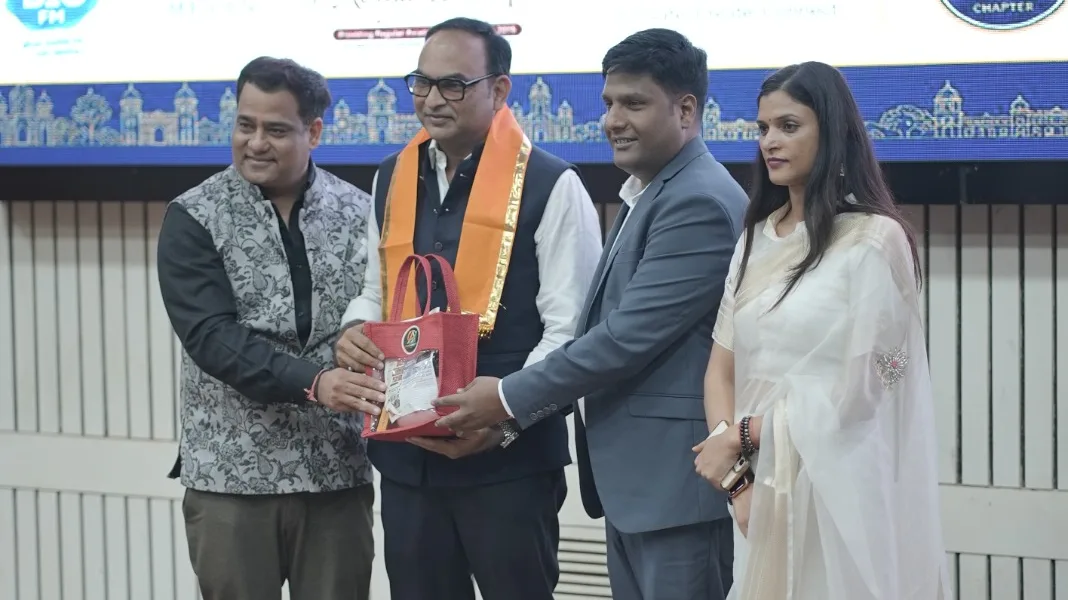
The Diver Maharana Pratap Vijay Smarak Committee also honored Hukamchand Sanwla by presenting him a commemorative portrait. The event concluded with the national anthem, and the exhibition organized on-site was widely appreciated for educating the next generation about Mewar’s historic heritage.
Diver: A Testament to Sacrifice
In a special session, Dr. Vivek Bhatnagar, superintendent of the Pratap Gaurav Research Center, presented a detailed archaeological and historical survey of Diver in collaboration with Rajasthan Vidyapeeth. Using maps created by local resident Chandan Singh, he highlighted the geography of the battlefield, rivers, forts, and military outposts, illustrating the strategic importance of Diver. Dr. Bhatnagar noted that every corner of Diver echoes tales of bravery and sacrifice. He explained the locations of Cheta, Antalgarh (now a small village), and Surajkund post, emphasizing their significance in Maharana Pratap’s guerrilla warfare tactics. Monuments erected at sites like Ratakhet preserve this historical legacy for posterity.