
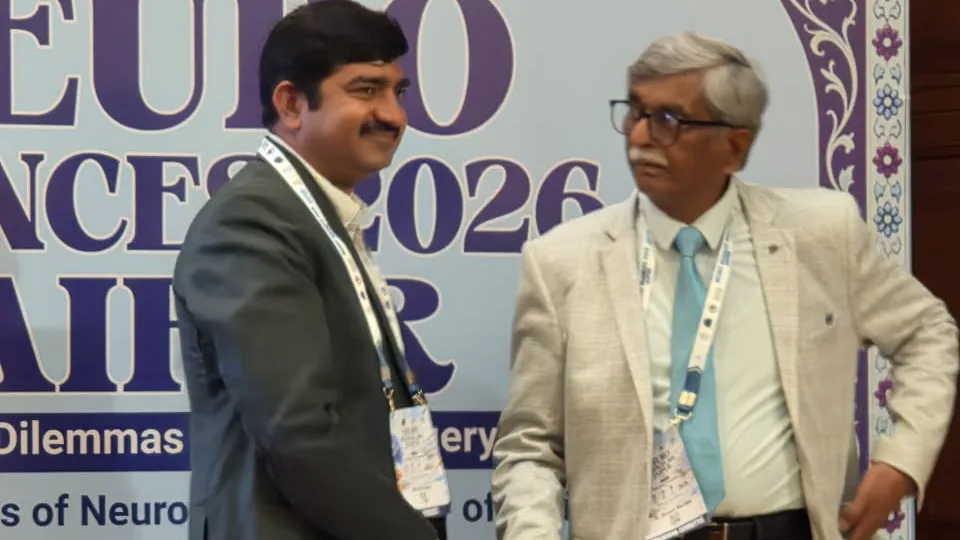
Udaipur, Dr. Ajit Singh, Director of the Neurosurgery Department at Paras Health, Udaipur, highlighted the complexities and advancements in spinal tumour surgery at the national neurosurgery conference, NeuroNuances, held in Jaipur from October 30 to November 1, 2026.
Dr. Singh was among the selected experienced neurosurgeons from across the country invited as a faculty member to share his expertise in advanced neurosurgical procedures under the aegis of the Neurological Society.
His special lecture focused on advanced surgical approaches for removing intramedullary spinal cord tumours, the technical challenges involved and strategies to preserve patients' neurological functions. He discussed the difficulties of accessing and removing tumours without damaging surrounding neural pathways, the risks of neurological complications during surgery and the importance of precision-based techniques to achieve effective tumour removal while minimising potential risks.
Spinal intramedullary tumour surgery is particularly challenging because these tumours develop within the spinal cord, where delicate neural pathways control movement and sensation. Even minor damage to these structures can result in serious neurological complications, including permanent disability. Therefore, advanced microsurgical techniques, intraoperative neuromonitoring and meticulous preoperative planning play a crucial role in improving surgical precision and patient safety.
Explaining the challenges involved, Dr. Ajit Singh said, "Surgery for tumours located within the spinal cord requires not only successful tumour removal but also the preservation of neurological functions that are essential for a patient's daily activities, independence and quality of life. The challenge is not simply to reach and remove the tumour, but to accomplish this while protecting the delicate neural pathways surrounding it. This requires careful planning, precise microsurgical techniques and continuous monitoring of neurological functions during surgery. Sharing such experiences with fellow neurosurgeons is equally important, as progress in this specialised field depends on collective learning within the medical community."
Dr. Singh's expertise in this specialised area includes the successful removal of a 17-centimetre-long spinal intramedullary ependymoma, an achievement recognised by the International Book of Records. The case represents a significant milestone in his neurosurgical practice and demonstrates his experience in managing complex spinal cord tumours.
The three-day conference brought together approximately 500 neurosurgeons from across India. It provided a platform for discussing recent developments in neurosurgery, sharing experiences involving challenging surgical procedures and learning from leading specialists in the field.
Dr. Singh's participation as a faculty member reflects the contribution of Udaipur's neurosurgical expertise to national academic discussions and highlights the continuing advancement of specialised surgical care in India.