.png)
The true measure of a strong democracy lies not merely in the regular conduct of elections, a parliamentary majority, or the popularity of political parties, but in ensuring that the Constitution stands above all, placing those in power, the opposition, and ordinary citizens on an equal footing before the law. When questions concerning social justice, reservation, religious freedom, and electoral fairness simultaneously occupy the centre of national discourse, the role of the Supreme Court becomes all the more significant. The judiciary is the constitutional institution to which citizens look for justice, expecting it to uphold the rule of law independently of political compulsions, social pressures, and the influence of those in power. Today, issues ranging from eligibility for reservation and religious conversion to electoral integrity and the dignity of the judiciary have emerged as crucial tests of this expectation. In examining these questions, it is essential neither to become a propagandist for any political side nor to harbour prejudice against any religious community. Instead, the spirit of the Constitution and the broader objectives of justice must remain at the heart of the debate. Reservation for Scheduled Castes is one of the Constitution’s historic instruments designed to address the consequences of centuries of social exclusion, untouchability, and discrimination. It is not merely a provision offering additional opportunities in education and employment; it is a constitutional intervention intended to correct a deeply entrenched social injustice that deprived a substantial section of the population of equal opportunities for generations. Therefore, the debate surrounding reservation and religious conversion must be approached on the basis of constitutional provisions and social realities, rather than emotional appeals, religious compulsions, or political allegations.
The Supreme Court’s clarification that individuals belonging to Scheduled Castes (SCs) and Other Backward Classes (OBCs) who convert to another religion may not remain entitled to reservation benefits under the applicable legal framework is a significant development. The Tamil Nadu government’s challenge to this position before the High Court, along with its stand in favour of continuing such benefits even after conversion to Islam or Christianity, raises important questions concerning the constitutional framework governing reservation and the criteria for determining eligibility. These questions deserve careful scrutiny in the light of the law, the historical purpose of affirmative action, and the principles of equality and social justice. The debate also brings into focus a wider concern: whether reservation benefits should continue when the legal conditions governing eligibility are no longer satisfied. Some organisations argue that caste-based discrimination does not exist within their religious traditions, while simultaneously advocating the continuation of reservation benefits for converts from historically disadvantaged communities. Such positions invite legitimate questions about consistency, eligibility, and the intended beneficiaries of affirmative action. However, these issues must be examined through evidence and constitutional principles rather than sweeping generalisations about religious communities. The relationship between conversion, social disadvantage, and reservation is a complex legal and social question that cannot be resolved through political rhetoric alone. Although several state governments have enacted stringent laws against unlawful or coercive religious conversion, concerns continue to be raised about their implementation and the protection of individual religious freedom. What is needed is a clear, consistent, and constitutionally sound approach by the Union government and the Supreme Court—one that prevents coercion and misuse of the law while safeguarding genuine freedom of conscience and ensuring that reservation benefits remain governed by the applicable constitutional and statutory provisions.
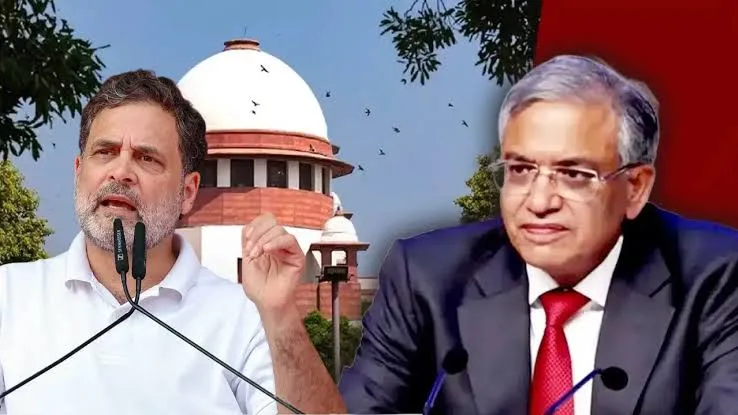
Within this broader constitutional framework, the Supreme Court’s intervention in disputes relating to the electoral process is equally noteworthy. On October 12, 2026, Rahul Gandhi and other leaders of the opposition INDIA alliance reportedly marched towards the Supreme Court over the Special Intensive Revision (SIR) of electoral rolls. The Court’s response to this development has drawn attention to an important question concerning the relationship between political protest and judicial independence. Although the opposition has raised allegations of irregularities in electoral rolls, the deletion of voters’ names, and concerns about the transparency of the electoral process, the truth of these allegations must be determined through judicial scrutiny and examination of the relevant records. Elections are not merely a mechanism for choosing a government; they are a constitutional opportunity for every eligible citizen to express their political will. The accuracy and credibility of electoral rolls are therefore not the concern of any single political party but a matter of fundamental importance to the entire democratic system. At the same time, taking political demonstrations directly to the Supreme Court raises questions about the appropriate means of expressing dissent and seeking institutional redress. Political disagreement is an integral part of democracy, but it must be expressed in ways that respect the independence and dignity of constitutional institutions.
On October 15, the Supreme Court reportedly sought responses to the opposition leaders’ petition from the Election Commission of India, Chief Election Commissioner Gyanesh Kumar, and Election Commissioners Sukhbir Singh Sandhu and Vivek Joshi. This development reinforces a fundamental constitutional principle: even decisions taken by an important constitutional body such as the Election Commission are subject to judicial review within the limits of the law. The independence of the Commission does not mean that every decision it takes must be regarded as beyond scrutiny. Equally, disagreement with a decision does not, by itself, establish that the Commission has acted improperly. The purpose of judicial review is to distinguish allegations from established facts, examine the legality of decision-making processes, and protect citizens’ constitutional rights. In the same sequence of events, the Supreme Court reportedly sought responses from Rahul Gandhi, Akhilesh Yadav, and other concerned leaders in connection with the march on October 12. The underlying concern was whether political demonstrations could create a situation in which pressure was brought to bear upon the judiciary. This episode must be assessed with due regard to three essential democratic principles: the right to peaceful protest, the freedom to express political disagreement, and respect for the dignity of the judiciary. The opposition has every right to question the government and the Election Commission, but respect for the independence of judicial institutions is also a constitutional responsibility. At the same time, the protection of judicial dignity must not become a pretext for curtailing legitimate criticism or peaceful dissent. The issuance of a notice does not establish anyone’s guilt; it is a procedural step intended to provide an opportunity to respond before the Court reaches a conclusion.
This is precisely where the question of balance between judicial activism and judicial restraint becomes important. If the judiciary remains silent in the face of social injustice, administrative arbitrariness, or violations of constitutional rights, public confidence in the justice system may erode. Conversely, if it assumes the role of a principal policymaker in every political controversy, the constitutional principle of separation of powers may be undermined. Democratic institutions are not adversaries competing for supremacy; they are distinct pillars of governance, each expected to operate within constitutional boundaries and hold the others accountable through lawful mechanisms. The legislature makes laws, the executive implements them, and the judiciary ensures that laws and their implementation remain consistent with the Constitution. A healthy balance among these three institutions forms the foundation of democratic stability. The prestige of the Supreme Court is built not merely on the firmness of its orders but, more importantly, on its impartiality, independence, and reasoned judgments.
What India needs today is a judiciary that is fearless in confronting injustice yet mindful of the limits of its jurisdiction; one that protects citizens’ rights without being influenced by political considerations; and one that safeguards the dignity of constitutional institutions while ensuring that they remain accountable under the law. Clarity on the relationship between religious conversion and reservation, transparency in electoral disputes, and respect for the judiciary may appear to be separate concerns, but they converge on one fundamental question: how can the supremacy of the Constitution be ensured in practice? Justice is not simply a matter of one side winning and another losing. It is a source of public confidence—a conviction that every citizen will be heard, every claim will receive an impartial hearing, and no individual or institution, however powerful, stands above the law. The true strength of the Supreme Court will be reflected when its judgments rise above political clamour and become enduring examples of constitutional wisdom, social sensitivity, and legal impartiality. Ultimately, the authority of the judiciary rests not merely on the power to pronounce judgments, but on the public’s faith that those judgments are guided by the Constitution, delivered without fear or favour, and directed towards the preservation of justice, equality, and democratic integrity.