
.png)
*Only when the new generation learns of the sacrifices made by their forebears will they truly grasp the real value of independence.* For us, August 14 is not merely the eve of India’s Independence Day. It marks a day in Indian history recorded as one of its most agonizing and darkest chapters—a time when the joy of freedom was accompanied by such profound pain in the lives of millions of Indians, a lingering ache that would be felt for generations. By declaring August 14, 2021, as ‘Partition Horrors Remembrance Day’ (*Vibhajan Vibhishika Smriti Diwas*), our esteemed Prime Minister Shri Narendra Modi has enshrined the struggles, sacrifices, and displacement of the millions who paid the price for the country's partition—losing their homes, land, property, families, and even their lives—into the nation's collective memory. Understanding the Partition is not simply about comprehending a historical event; rather, it is about realizing the immense human tragedy at the cost of which we attained our independence. *Why, after all, did the country’s partition take place?* It is essential to place this question before the current generation. The partition of India was not a decision made overnight. It was the result of numerous factors, including decades of colonial politics, the system of communal representation, the rise of the personal political interests and ambitions of certain leaders, growing mistrust in Hindu-Muslim relations, and, ultimately, the demand for a separate nation by the Muslim League. British rule leveraged the diversities of Indian society within the framework of political representation in such a way that our communal identities gradually became the basis for political competition. In the 1940s, the Muslim League’s demand for Pakistan grew increasingly vocal; the events of 1946—including the failure of the Cabinet Mission Plan and the subsequent rise in communal violence—rendered the situation extremely complex. Violence across various regions—such as Calcutta, Noakhali, Bihar, Rawalpindi, Punjab, and Sindh—shattered our long-standing social fabric. The decision to rapidly transfer power and the process of partitioning authority further exacerbated the grim situation. Ultimately, India and Pakistan emerged as two independent nations, but this also marked the beginning of a humanitarian tragedy that perhaps no one had ever imagined. Mahatma Gandhi, the Father of the Nation, remained a staunch advocate of India's unity and Hindu-Muslim harmony throughout his life. He was vehemently opposed to Partition. He had famously remarked that the partition of India would be akin to slicing his own body in two. However, faced with the ferocity of the violence and the looming threat of civil war, the situation became so dire that the Congress leadership eventually accepted the plan for Partition. *The moment homes were left behind and roots were severed* The anguish of families migrating to India from Sindh, Western Punjab, the Frontier Province, and East Bengal during Partition cannot be grasped merely through statistics or numbers. Individuals who once owned homes—whether grand mansions, shops, farmlands, factories, or businesses—in cities like Lahore, Rawalpindi, Multan, Sialkot, Peshawar, Karachi, Hyderabad (Sindh), or Dhaka, and who commanded social respect, suddenly found themselves reduced to refugees. Some locked the doors of their *havelis*, believing they would return in a few days. Others handed the keys of their shops to neighbors, promising a quick return. Some pressed the soil of their fields to their foreheads in reverence. Mothers held their children’s hands and set out into the unknown, unsure of where they would find shelter—yet, they could never return. Left behind were homes, temples, gurdwaras, markets, fields, shops, memories of relationships, and the accumulated wealth of generations. Ahead lay an uncertain future. Millions were displaced due to the Partition, making it one of the greatest humanitarian tragedies—or indeed, one of the most harrowing mass migrations—in modern history. Unspeakable acts of violence, killings, and displacement shattered the lives of countless families. *Blood-Stained Trains and the Collapse of Humanity* Among the most harrowing memories of the Partition are the refugee trains. People boarded these trains believing they would reach a safe haven, yet many arrived at their destinations carrying corpses instead of living passengers. These trains, traversing the soil of Punjab, witnessed some of the most gruesome scenes in history. Amidst the violence, passenger-laden trains were attacked, and thousands were killed. Memories of these ‘Blood Trains’ remain an integral part of the oral history of many families to this day. Women endured the most excruciating suffering; inhumane acts such as abductions, rapes, forced conversions, forced marriages, and separation from families occurred on a massive scale. Historical records and the testimonies of affected women reveal the sheer horror of this tragedy. Remembering this should not be about fostering hatred toward any community, but rather about understanding that when the poison of hatred, mistrust, and violence spreads through society, it is humanity that suffers the first defeat. *My Family Also Endured the Agony of Partition* The tragedy of India’s Partition is not merely an event recorded in history books; it is a living memory for millions of families—a pain that continues to be felt across generations. My family was among the hundreds of thousands of Sindhi families forced to leave behind their homes, properties, and businesses to migrate to India as refugees in 1947. My family originally hailed from Tando Adam in Sindh. My grandfather, Shri Bhavan Das, owned a home, land, and a thriving grain business there; however, the circumstances following the Partition compelled the family to abandon everything and flee Sindh. We endured the agony of displacement—suddenly becoming homeless in our own land overnight and leaving behind our entire life's savings. Another deep wound inflicted upon my family by the Partition was that my maternal grandfather and one of my maternal uncles remained behind in Sindh. The pain of Partition continues to unsettle me and my family, given the circumstances and hardships we endured. While a physical border was drawn between India and Pakistan, the line that cut through the relationships with our loved ones left behind in Sindh has never faded from our hearts. After arriving in India, my father had to rebuild his and his family's lives from scratch. At times, the family survived by selling paper bags and roasted chickpeas. Later, my father, Shri Bhavan Das, worked as a peon in the post office and eventually rose to the position of Postmaster. I vividly remember studying under streetlights. *Displaced, but Unbroken* The Partition of India and Pakistan displaced around twenty million people and claimed the lives of approximately two million. For the Sindhi, Punjabi, and other displaced families who arrived in India, the greatest challenge was starting life from zero. Those who had owned large homes and businesses in Pakistan were forced to live in tents or refugee camps, or even spend nights under the open sky. Many families began their new journey of livelihood with small shops or roadside businesses; some took up jobs, others operated pushcarts, and some established small-scale industries. Yet, despite enduring such a harrowing tragedy, instead of living a life of dependency, they chose hard work, self-respect, entrepreneurship, and education as their tools. This was their greatest victory. This struggle is not merely the story of one family, but of the millions of displaced families who—fueled by hard work, self-confidence, and faith in the nation—built a new world out of the ashes. They did not accept displacement as an unchangeable fate or give up on life; they struggled against adversity, carved out a place for themselves in the new India, and contributed to nation-building. This resilience is the greatest strength of the families affected by Partition. They lost their past, but they never lost the resolve to build their future. Today, the significant contribution of the Sindhi and Punjabi communities is evident across India's trade, industry, services, education, healthcare, transport, small and large-scale enterprises, and tax systems. Families that had lost everything during the Partition played a vital role in strengthening India's economy. They demonstrated that while material assets could be taken away, talent, hard work, courage, and self-respect could not. *Partition Horrors Remembrance Day: Healing Wounds, Not Reopening Them* We are grateful to Prime Minister Shri Narendra Modi, upon whose initiative the Central Government decided to observe August 14th every year as ‘Partition Horrors Remembrance Day’ (Vibhajan Vibhishika Smriti Diwas). This is not merely about recalling the past; the objective is to embed the pain of those families—whose suffering had long remained confined to personal memories and family anecdotes—into the collective national consciousness. Observing this day allows the countless untold stories of displaced families—stories that failed to find adequate space in the pages of history—to finally be heard. Remembering the agony of Partition is not intended to foster animosity towards any community; rather, it is essential to impress upon future generations the immense value of social harmony, brotherhood, and national unity. The horrors of Partition convey a vital message: the politics of hatred ultimately divides society, whereas dialogue, trust, and unity strengthen the nation. These memories remind us that while the celebration of independence is a matter of pride, acknowledging the pain of Partition is equally our historical responsibility. The Government of India has clarified that the purpose of this day is to acquaint present and future generations with the anguish of Partition and the struggles of displaced people, while simultaneously strengthening social harmony, unity, and human empathy. This day teaches us that forgetting history is not the solution; remembering it is crucial to ensure that the same mistakes are not repeated. *The Greatest Message for the New Generation* Today, our children and youth are born into an independent India. For them, concepts like borders, parliament, the constitution, democracy, the Tricolour, and passports are natural, everyday realities. However, for their ancestors, freedom meant far more than merely liberation from British rule. Along with independence, they were forced to abandon their homes and witness harrowing events. Some lost their mothers, others their fathers; some lost their brothers, and others their wives. Some lost their sisters along the way; others left behind their entire worldly possessions, while some watched their entire lives and homes being destroyed before their very eyes. Therefore, when today’s generation hoists the Tricolour on August 15th, they should view it not merely as a celebration, but as an occasion for gratitude. They must remember that this freedom was won through the sacrifices and immense hardships endured by their forebears, and through the countless known and unknown sacrifices made by so many. The agony of Partition inspires us to pledge that we will never allow India to face circumstances where human beings turn against one another in the name of religion, caste, language, or region. Our strength lies in our diversity; our identity is our unity; and our future rests on social harmony. While August 14th reminds us of the pain of Partition, August 15th inspires us to resolve to build a developed India by 2047. On 'Partition Horrors Remembrance Day,' let us pay tribute to those ancestors of ours who, despite losing everything, made India their home; they struggled, toiled, and contributed to nation-building. Remembering their sacrifices is the true homage we can offer them. I urge the new generation not to view freedom merely as a right, but to cherish it as an invaluable legacy bequeathed by our forebears; for it is the responsibility of our generation to safeguard and enrich the very freedom for which a previous generation left behind their homes and lives. Therefore, while we remember the horrors of Partition, let us draw inspiration not for hatred, but for national unity, harmony, the ideal of an undivided India, and national consciousness. This alone would be a fitting tribute to the millions of displaced people and those who made the ultimate sacrifice.
India
The Horrors of Partition: A Price Paid for Freedom That We Must Never Forget
– Vasudev Devnani,Hon.Speaker of Rajasthan Legislative Assembly

Related stories
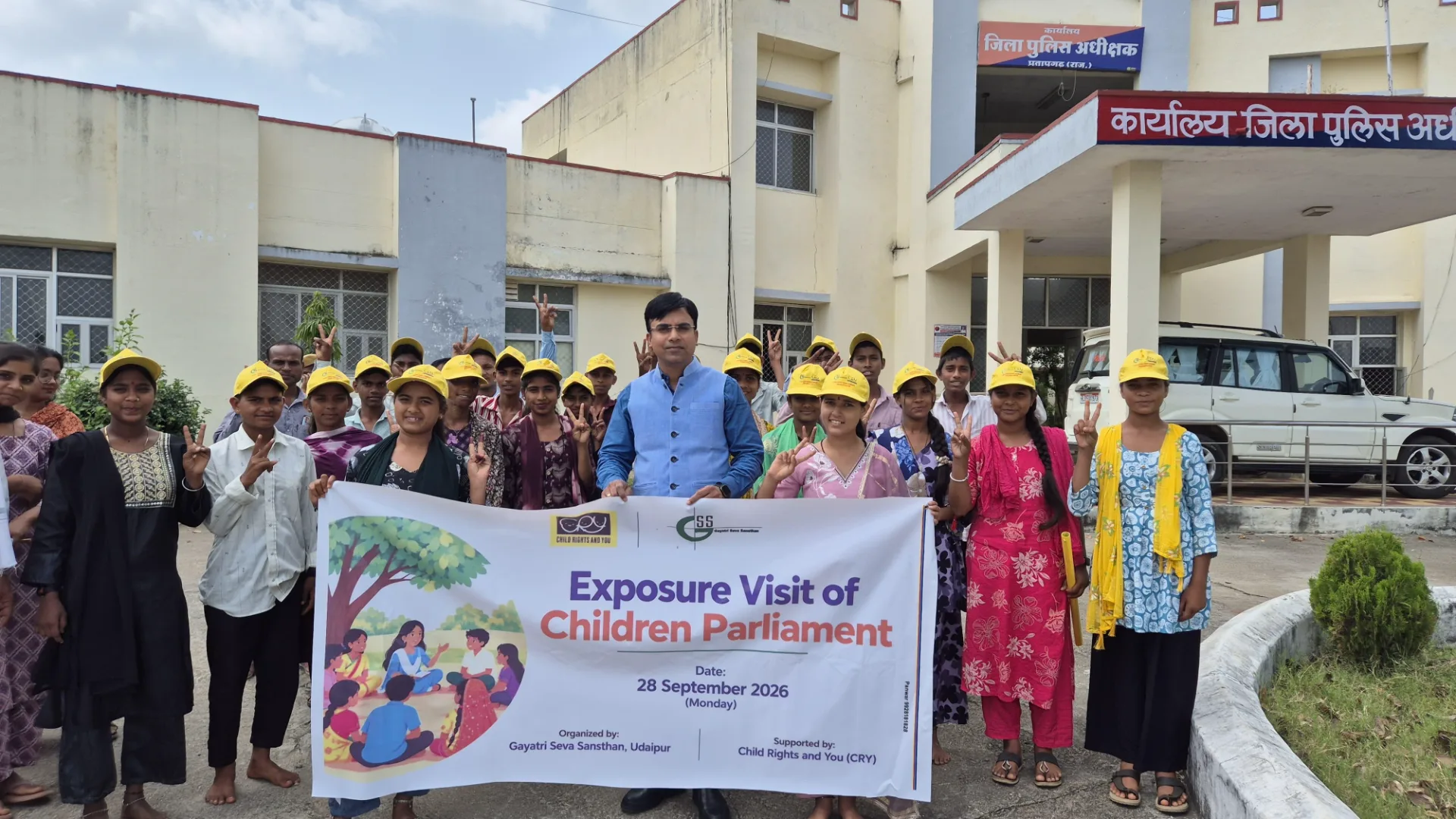
If Someone Scares You or Something Goes Wrong, Tell Me Directly, Says SP Vishal Jangid
Pratapgarh: For the first time, representatives of Bal Sansads (Children’s Parliaments) formed in tribal and…
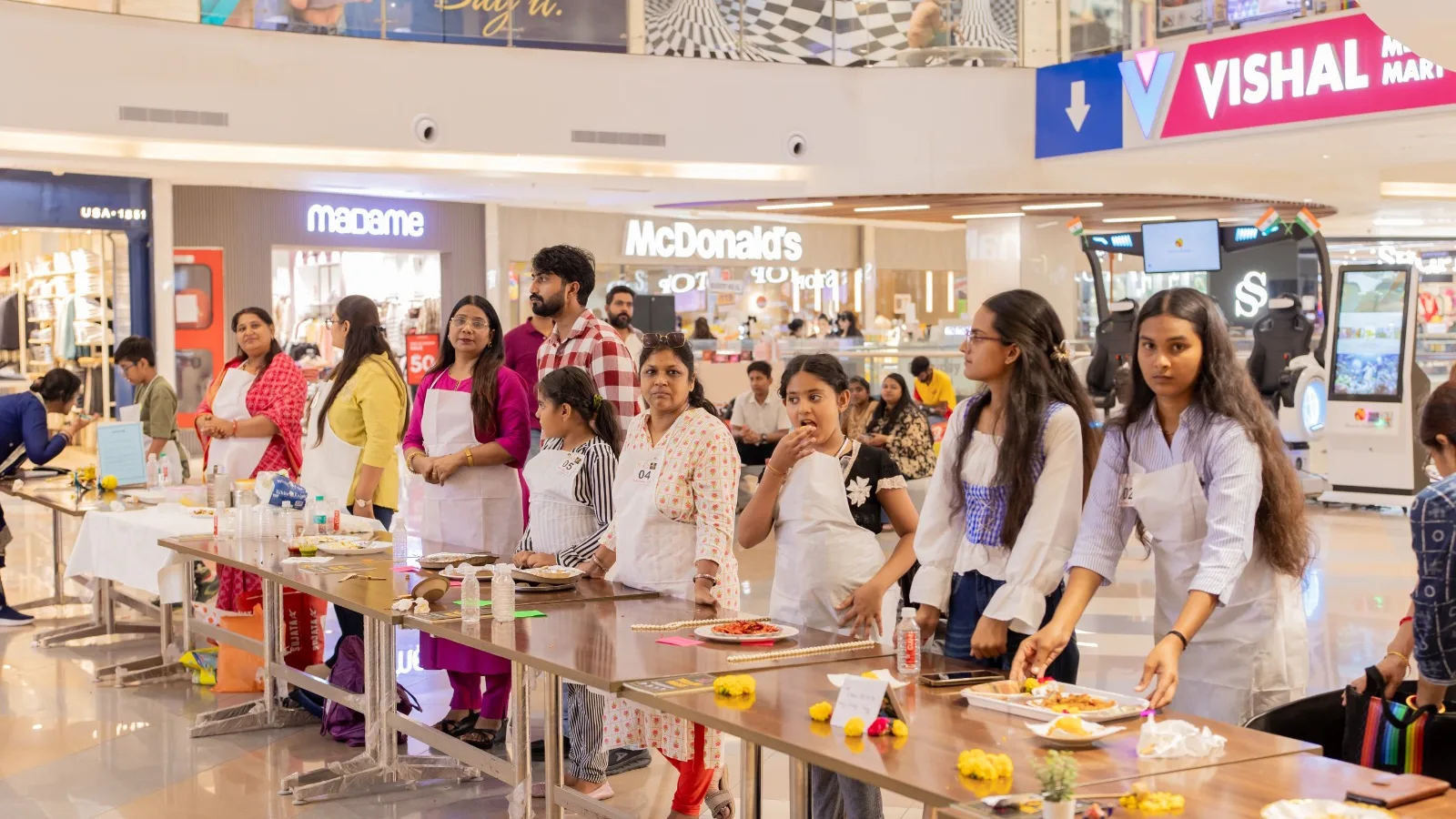
Urban Weekender at Urban Square Mall Draws Over 100 Participants Showcasing Culinary Talent
Udaipur: Urban Square Mall hosted ‘Urban Weekender’ over the weekend, offering residents and families an oppo…
Prayagraj / Meja: Meja Must Change for Prayagraj to Change — Sanjay Bhushan Kushwaha Pledges Development
Sanjay Bhushan Kushwaha, National Spokesperson for the Sanyukt Vikas Party (SNVP) representing the Meja Assem…
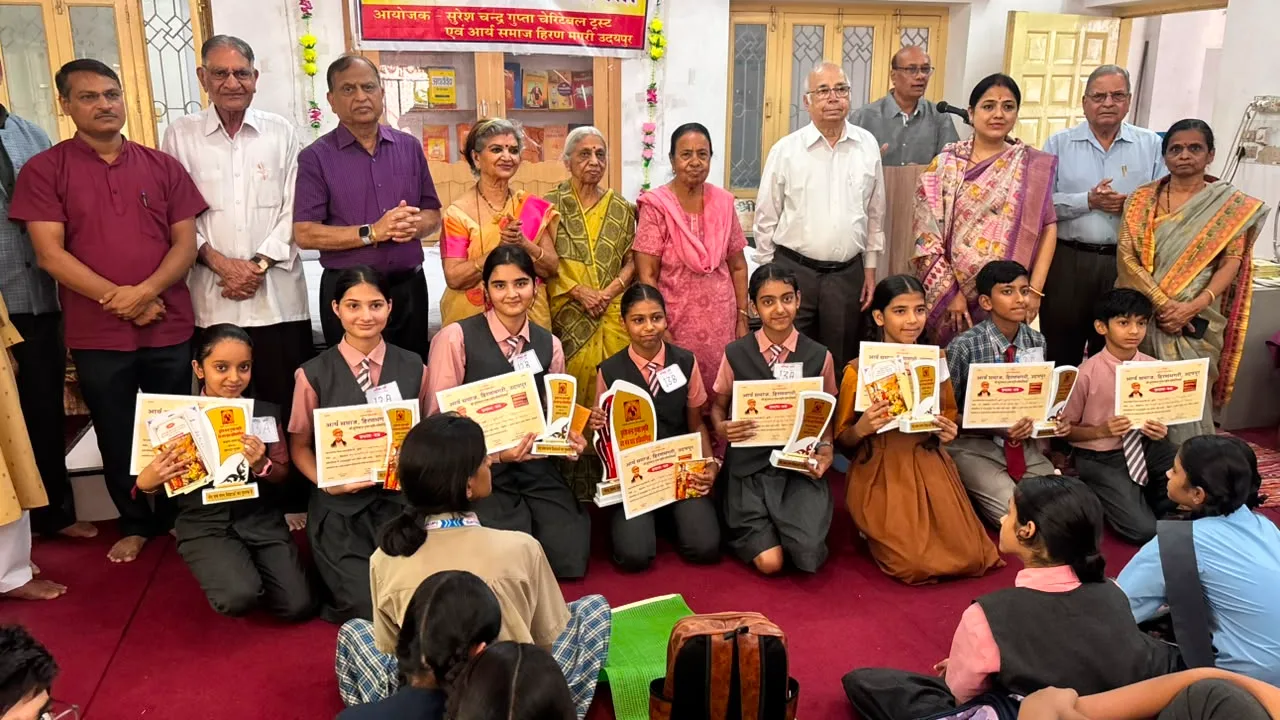
Vedic Chants Resonate at Suresh Chandra Gupta Memorial Veda Mantra Recitation Competition
Udaipur: Arya Samaj Hiran Magri, Udaipur, organised the Inter-School Suresh Chandra Gupta Memorial Veda Mantr…