.png)

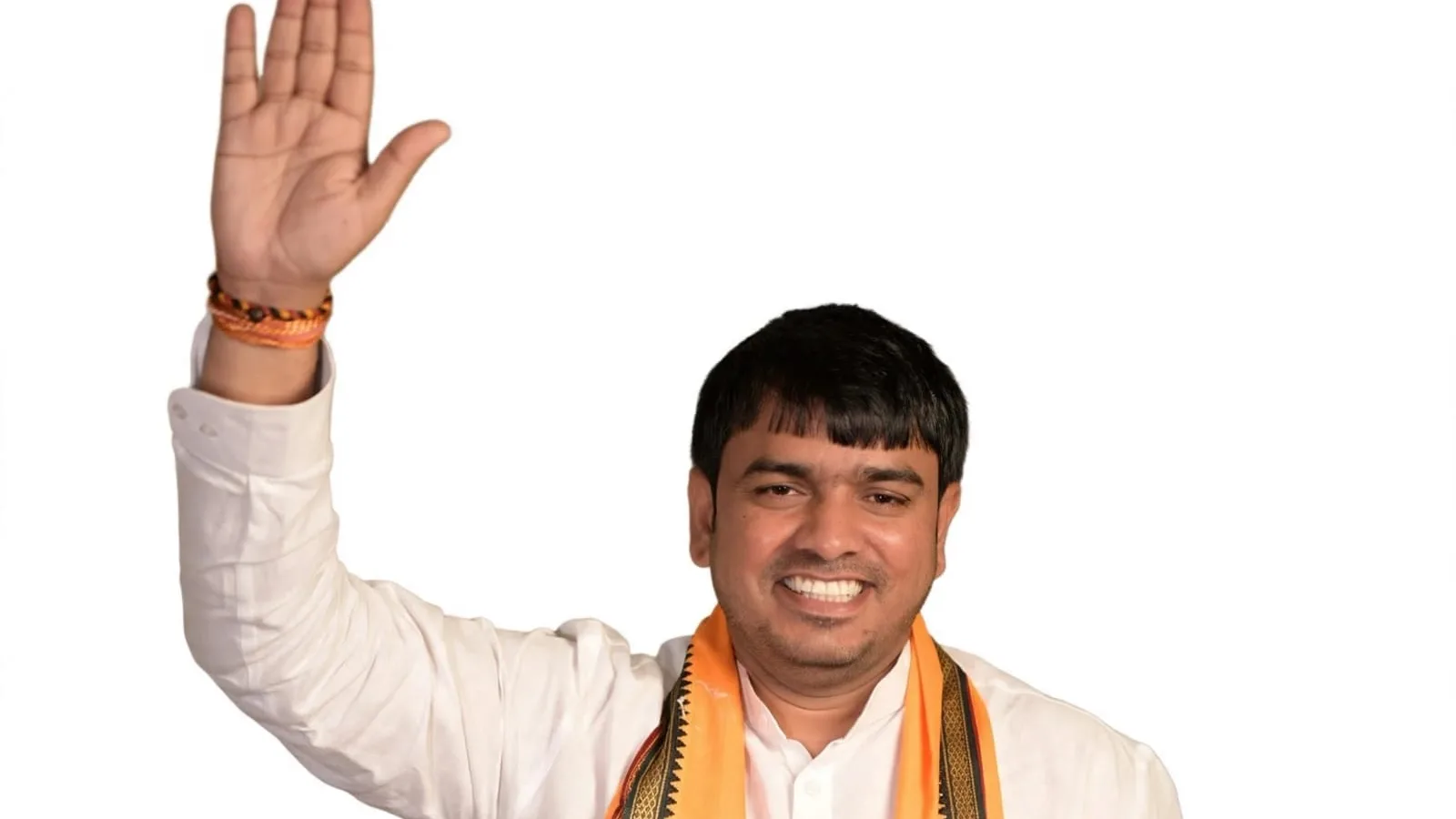
Following the conclusion of the Lok Sabha session, Udaipur MP Dr. Mannalal Rawat held a press conference addressing key parliamentary developments, economic milestones, and regional political conflicts. While the address served to highlight the ruling party’s legislative agenda and developmental initiatives, it was equally defined by aggressive political messaging aimed at undermining both the primary opposition (Congress) and regional political rivals, particularly the Bharat Adivasi Party (BAP). 1. Framing Parliamentary Dynamics: The Opposition Narrative Dr. Rawat’s commentary on the parliamentary session reflects a standard parliamentary rhetoric—attributing legislative friction entirely to opposition disruption. Accountability vs. Disruption: Dr. Rawat criticized the opposition for stalling proceedings and shifting stances. While parliamentary disruptions do impede legislative velocity, such rhetoric often serves as a dual-edged sword: it defends government intent while deflecting scrutiny from how controversial bills are debated or passed amid chaos. Key Legislative Claims: He highlighted significant legislative movements, including the Anti-Paper Leak Bill, NTA restructuring, AI-driven Data Protection legislation, and the Jal Jeevan Mission 2.0 extension to 2028. Additionally, the referral of the FCRA Bill to a Joint Parliamentary Committee (JPC) was framed as a step toward financial transparency and national sovereignty. 2. Economic Indicators and Foreign Trade Rhetoric To reinforce the vision of a "Viksit Bharat" (Developed India), Dr. Rawat cited trade statistics presented by Union Minister Piyush Goyal: Comparison of Trade Agreements: He highlighted that prior to 2014, Free Trade Agreements (FTAs) covered roughly $10 trillion in economic engagement across 10 agreements, whereas post-2014 FTAs strategically engage with global markets representing $60 trillion in GDP—a sixfold expansion. Analytical Takeaway: While the metric underlines India's expanding global trade integration, critical analysis requires looking beyond aggregate market coverage to evaluate actual export gains, trade deficits, and domestic manufacturing impacts resulting from these agreements. 3. Escalating Regional Rivalry: Targeted Critique of BAP A significant portion of Dr. Rawat's address was dedicated to a sharp attack on the Dungarpur-Banswara MP and the Bharat Adivasi Party (BAP). This reflects deepening ideological and electoral friction in Southern Rajasthan's tribal belt. Ideological & Cultural Polarization: Dr. Rawat accused BAP leadership of acting as a "subservient ally" to Congress and attacking local cultural and religious traditions. By linking BAP's narrative on indigenous identity and tribal religious codes to external agendas, the discourse shifts from developmental competition to ideological polarization. Security & Extremism Allegations: The MP made serious political allegations, linking BAP leadership to sympathy for Naxalite figures (specifically referencing the encounter of Naxal leader Hidma and slogans raised at India Gate). Such high-stakes rhetoric underscores how regional identity politics in tribal zones is increasingly being framed through the lens of national security. The UN Visit Controversy & Sovereignty: Rawat criticized the BAP MP’s recent visit to the United Nations, arguing that diplomatic protocols were breached and that framing indigenous rights externally challenges constitutional boundaries and national sovereignty. BAP's counter-claim of it being a "private visit" highlights an ongoing constitutional and political debate over protocol versus individual MP rights on international platforms. 4. Youth Engagement & Generation Z Paradigm In contrast to his political attacks, Dr. Rawat adopted a constructive posture when discussing Generation Z: Perspective on Gen Z: Acknowledging them as tech-native, inquisitive, and highly capable, he emphasized that their global perspective and critical questions are central to driving a "Viksit Bharat." Policy Alignment: By connecting Gen Z's aspirations with recent digital/AI legislation and education reforms, the statement attempts to bridge traditional political outreach with modern demographic realities. Dr. Mannalal Rawat’s briefing operates on two distinct tiers: governance messaging and regional political warfare. On one hand, it projects an image of a decisive, reform-oriented central government expanding economic reach and tackling governance issues like paper leaks and water access. On the other hand, it signals an intensifying political battle in Southern Rajasthan, where the ruling party is actively working to delegitimize the emerging influence of the Bharat Adivasi Party by framing its regionalist and identity-based platform as contrary to national integration and constitutional protocols.
Source: Prakesh Sharma