
.png)
On 15 August, the Red Fort, the fluttering Tricolour, the armed forces standing vigilant on our borders, and the supreme sacrifices of the great heroes of India’s freedom struggle naturally come alive in our collective consciousness. Alongside this, however, another idea needs to emerge in our national discourse on Independence Day: The fundamental strength of India’s freedom, integrity and sovereignty lies not only in its political boundaries, but also in its mountains, rivers, dense forests and vast watersheds and catchment areas. From the snow-clad peaks of the Himalayas to the ancient Aravalli Range of Rajasthan, and from the Vindhya-Satpura ranges of central India to the rich Western Ghats in the south, India’s mountain systems are not merely geological or geographical formations, nor are they simply tourism destinations. They are our nation’s natural fortresses, sources of water, climate regulators, inexhaustible reservoirs of biodiversity, carriers of sustainable socio-economic prosperity, and living memories of our multifaceted civilisation. Our rivers originate in these mountains and watersheds and provide the lifeblood of India’s agriculture, industry, health and everyday life. Many of our civilisations, pilgrimage centres, cities, trade routes and cultural traditions developed along these rivers. History bears testimony to the fact that mountains, rivers and forests have been the foundations of social, cultural, strategic and ecological development. While mountains have served as natural barriers against external invasions, their narrow passes have also functioned as gateways for cultural exchange and strategic control. The passes of the Hindu Kush and the Himalayas influenced historical movements from the north-west. Through the valleys of the mountains travelled not only armies, but also ideas, languages, trade, religions, art and cultures. The long-term strategic capability of any nation rests upon its geographical, ecological and cultural integrity. Protecting nature and the natural geography of the country is, therefore, in essence, a protection of its strategic capability, water security and cultural continuity. The Himalayas: The Himalayas are not merely India’s northern natural boundary. They form the foundation of vast watersheds associated with the Ganga, Yamuna, Brahmaputra and Indus river systems. They influence monsoon winds, climate, glaciers, springs and mountain water systems. At the same time, the Himalayas occupy a profound place in India’s cultural consciousness. Kedarnath, Badrinath, Amarnath, the cultural memory of Kailash, Gangotri and Yamunotri are reminders that Indian society has viewed the Himalayas not merely as geography, but also as a realm of faith and spiritual consciousness. Therefore, protecting the Himalayas is not merely about border security—it is also about protecting water, climate and India’s cultural heritage. The Aravallis: Where Geography Became the Strength of Resistance :The Aravalli Range extends across Gujarat, Rajasthan, Haryana and Delhi. It is an ancient mountain system associated with important watersheds, groundwater-recharge areas, wildlife habitats and river systems. It performs an important ecological and watershed-dividing function in north-western India and plays a role in regulating the eastward spread of the Thar desert influence. The Aravalli Range is also the finest example of an Indian historical tradition in which nature and self-respect became inseparably intertwined. An important foundation of Maharana Pratap’s heroic resistance and the struggle of Mewar was the difficult terrain of Mewar shaped by the Aravallis. The narrow valleys, forests and rugged hills of the Aravallis provided the warriors of Mewar with natural protection, shelter and favourable conditions for guerrilla warfare. The forests, valleys and caves of the Aravallis provided shelter and access to local resources during difficult times. The valiant Bhil tribal community**, with its extraordinary knowledge of every corner of the Aravallis, played an important role in Pratap’s struggle and ultimate Victory. This demonstrates that when a society understands its natural geography and develops a relationship of coexistence with it, the same geography becomes its strength and places the crown of victory upon it. But the Aravallis, which sheltered self-respect, freedom and resistance for centuries, are today themselves calling for protection. Unplanned urbanisation, illegal mining, an indiscriminate resort culture and the expansion of concrete have severely damaged this ancient mountain range. The very hills that we once regarded as natural fortresses are today being treated as obstacles to development. This is a grave insult to the great history, ecological existence and cultural heritage of the Aravallis. The Aravallis are, in reality, a Sacred Ecological Landscape where geology, forests, rivers, lakes, watersheds, folk arts, archaeological heritage, pilgrimage traditions and indigenous knowledge come together in a remarkable continuum. The Gavari ritual performed by the Bhil community symbolises the profound relationship between nature, Shakti (sacred power), community and spirituality. Similarly, the tradition of worshipping hills as Magra Bavji demonstrates that the spirit of environmental conservation has been embedded in India’s folk consciousness for centuries—long before modern environmental laws came into existence. Behind these traditions lay a profound ecological and environmental ethic. The mountain was sacred; therefore, cutting it was wrong.The water source was sacred; therefore, polluting it was unacceptable. The forest was the lifeline of life; therefore, its protection was a community responsibility. Reverence for nature was an expression of surrender and devotion to both society and the divine. At a time when, despite modern legal and administrative frameworks, we continue to struggle to protect the environment, we have much to learn from these folk traditions and indigenous philosophies. Protecting the Mountains,hills Means Protecting Water, Life and Culture : Therefore, protecting the Himalayas is not merely about protecting mountains; it is about protecting the water, climate, life and culture of the entire northern Indian region. Protecting the Aravallis is not merely about protecting the hills of Rajasthan; it is about protecting the water, biodiversity, climate, forests, tribal communities and cultural landscape of north-western India. Protecting the Vindhyas and Satpuras is not merely about protecting the mountains of central India; it is about protecting its rivers, forests, biodiversity and indigenous cultural traditions Protecting the Western Ghats is not merely about protecting biodiversity; it is also about protecting the rivers, rainfall, agriculture and sacred natural traditions of southern India. India’s Culture Cannot Be Understood Separately from Its Mountains and Rivers : India’s culture cannot be understood separately from its mountains and rivers. There is history in the names of our mountains. There is memory in the names of our rivers. There is geography in our pilgrimage centres. There is water and forest in our folk songs. There are seasons and nature in our indigenous festivals. And in our sacred groves, biodiversity and faith coexist. Therefore, when a river dies, it is not only its water that disappears. The folk memory, livelihoods, pilgrimage traditions, festivals and cultural identity associated with it also become weakened. When a mountain is cut away, it is not merely rock that disappears; sometimes an entire cultural landscape disappears with it. The conservation of cultural heritage and the conservation of natural heritage are, in reality, complementary to each other. National Security: Beyond Guns and Tanks : Today, it is essential to recognise that national security cannot be limited to the deployment of guns and tanks along national borders. From a strategic perspective, water security, food security, energy security and climate stability are equally essential for the freedom, social stability and economic progress of a nation. Water is fundamental. No sector of the modern economy—whether agriculture, heavy industry, advanced manufacturing or the functioning of cities—can operate without water. The primary foundation of water security is the watershed, and it is the mountains that protect these watersheds. Through their vegetation and soil structure, mountains retain rainfall, facilitate groundwater recharge and help sustain the flow of rivers. Therefore, when a mountain is destroyed, it is not merely a geographical landform that disappears. Along with it, a water cycle, a watershed, an ecosystem and a culture may also be weakened. The consequences can manifest as agricultural distress, food insecurity, water shortages for industry and, ultimately, economic instability. Mineral Capital and Natural Capital: Finding the Balance : There is another important dimension—the utilisation of mineral resources. It would be impractical to insist that the minerals present in hills should not be used at all for national economic progress. India needs mineral resources for its growing population, industrialisation, infrastructure and green energy transition. The question, therefore, is not whether mining should be completely stopped, but rather how to safeguard the existence and ecological integrity of the mountains that hold these minerals within their depths. Minerals extracted from a mine constitute Mineral Capital. A healthy mountain, on the other hand, constitutes Natural Capital. We must establish a prudent, scientific and sustainable balance between mineral capital and natural capital, so that India’s mineral-based development can progress while our natural guardians mountains, rivers, forests, ponds , wetlands and lakes—remain protected and enriched. 😃 The Responsibility of 21st-Century India :Protecting Ecological sovereignty: The greatest responsibility before 21st-century India is to safeguard its Ecological Freedom or Ecological Sovereignty. If our mountains are cut down and levelled, rivers dry up and turn into polluted drains, groundwater levels descend into the depths, soils become barren, biodiversity disappears and the air becomes toxic, political freedom alone will not be enough to give us a secure and prosperous future. A nation that loses its natural capital ultimately weakens its economic autonomy and strategic sovereignty. And if it loses its natural cultural heritage, it also weakens the soul of its civilisation. Therefore, unless every citizen and policymaker accepts the protection of nature as a national duty, our freedom will not become truly secure and enduring. If mountains survive, water survives. If water survives, agriculture survives. If agriculture survives, the economy survives. If nature survives, culture survives. If culture survives, our civilisational identity survives. And when nature, the economy, strategic strength and culture remain secure, an independent India can truly become united, self-reliant and self-sustaining. The Resolve for This Independence Day : Therefore, establishing Ecological Freedom through a positive and constructive Citizen ’s movement should become the new national goal of India today. The freedom we celebrate on 15 August must not remain merely a remembrance of political independence achieved in 1947. It must also become a commitment to safeguarding the natural and cultural foundations upon which that freedom rests. Let us therefore resolve to protect our mountains, hills because they protect our waters ;to protect our rivers because they sustain our economy and culture;to protect our forests because they sustain biodiversity and life;to protect our watersheds because they sustain our future. And to protect our cultural landscapes because they carry the memory and identity of India. Let this Independence Day mark a new journey— From Political Freedom to Ecological Freedom : Through a positive, constructive and citizen-led movement, let us secure India’s natural fortresses and thereby secure India’s future. Dr. Anil Mehta Paryavaran Sanrakshan Gatividhi( PSG) Vidya Bhawan
India
Achieving Ecological Sovereignty through a Constructive Citizen ’s Movement.
Dr. Anil Mehta Paryavaran Sanrakshan Gatividhi ( PSG) & Vidya Bhawan

Related stories
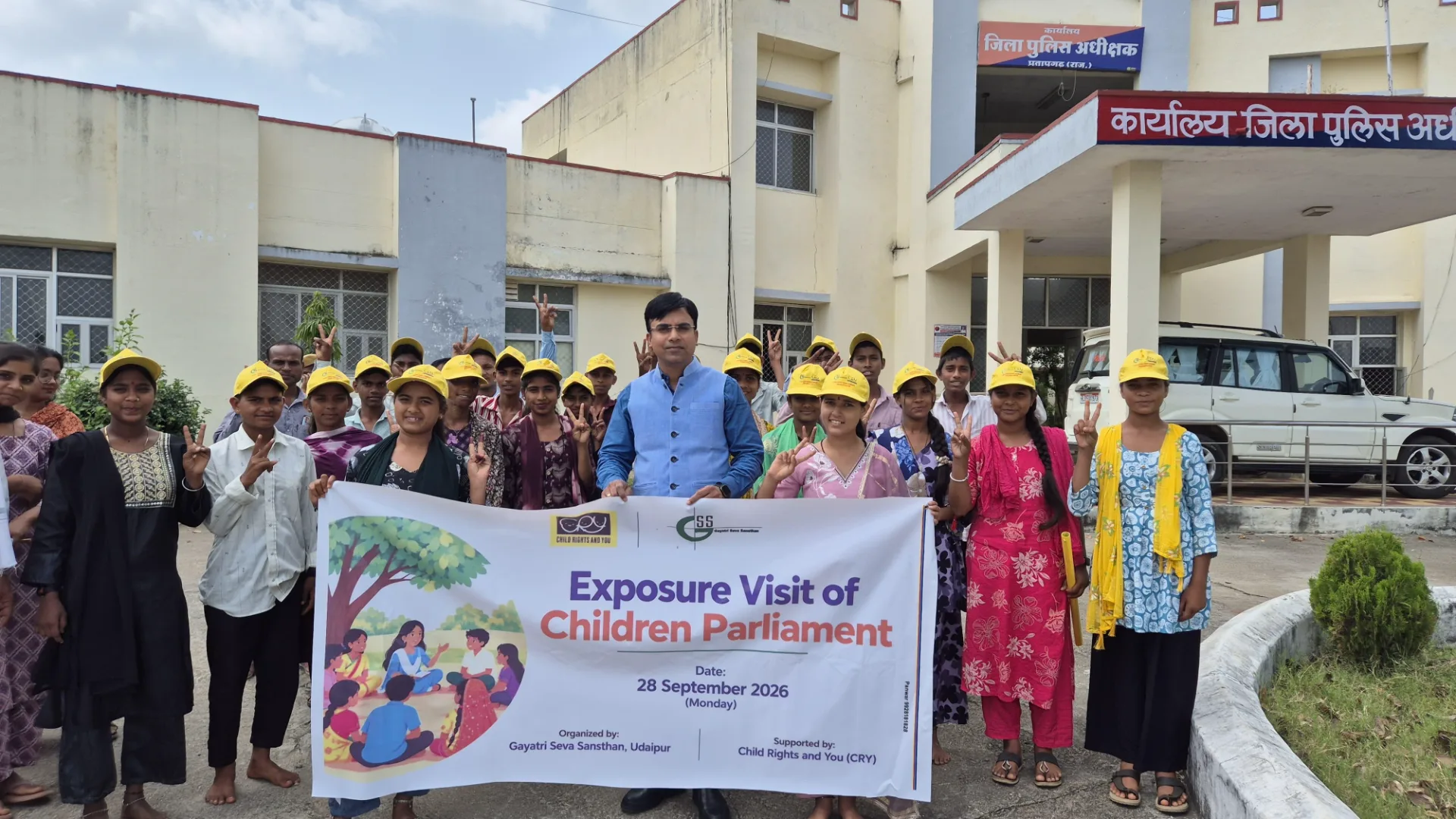
If Someone Scares You or Something Goes Wrong, Tell Me Directly, Says SP Vishal Jangid
Pratapgarh: For the first time, representatives of Bal Sansads (Children’s Parliaments) formed in tribal and…

Urban Weekender at Urban Square Mall Draws Over 100 Participants Showcasing Culinary Talent
Udaipur: Urban Square Mall hosted ‘Urban Weekender’ over the weekend, offering residents and families an oppo…

Prayagraj / Meja: Meja Must Change for Prayagraj to Change — Sanjay Bhushan Kushwaha Pledges Development
Sanjay Bhushan Kushwaha, National Spokesperson for the Sanyukt Vikas Party (SNVP) representing the Meja Assem…
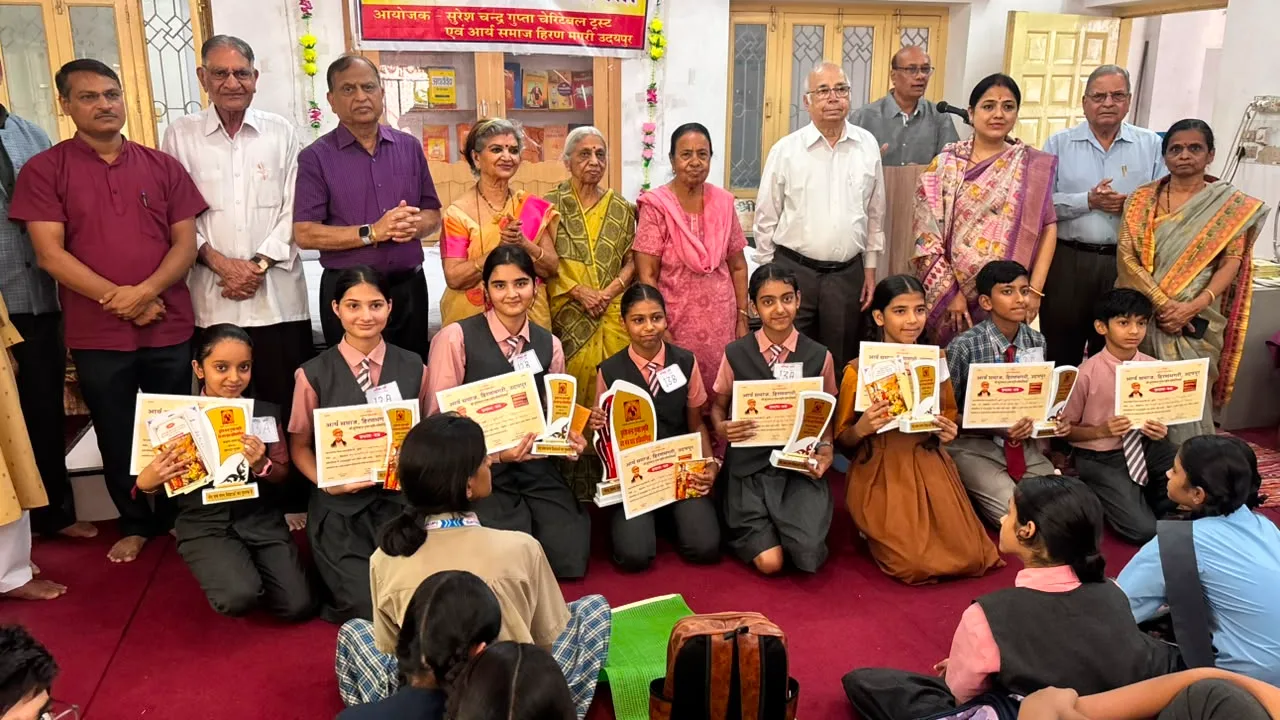
Vedic Chants Resonate at Suresh Chandra Gupta Memorial Veda Mantra Recitation Competition
Udaipur: Arya Samaj Hiran Magri, Udaipur, organised the Inter-School Suresh Chandra Gupta Memorial Veda Mantr…